
Best Ceramic Non-Stick Cookware Under ₹1,000 in India (2026)
Ceramic non-stick cookware went from a niche "healthy pan" to the default upgrade in most Indian kitchens over the last two years — mostly because the price finally dropped. You no longer need to spend ₹3,000 on a single fancy pan. A full set of ceramic-coated tawa, fry pan, sauce pan and kadai now lands under ₹1,000 per piece, and the everyday cooking experience is genuinely better than a scratched old Teflon pan.
This guide covers what ceramic non-stick actually is, where it beats (and loses to) classic PTFE Teflon, how to make a cheap coating last, and four real deals live right now on RichDeals /offers that each sit under ₹1,100.
What "ceramic non-stick" really means
Ceramic non-stick is not solid ceramic like a clay pot. It is a thin sol-gel silica coating (essentially a glass-like layer) sprayed and cured onto an aluminium body. The important part for most buyers: it is PTFE-free and PFOA-free. That means no Teflon chemistry, and no risk of the fumes that a scratched, overheated PTFE pan can release above ~260°C.
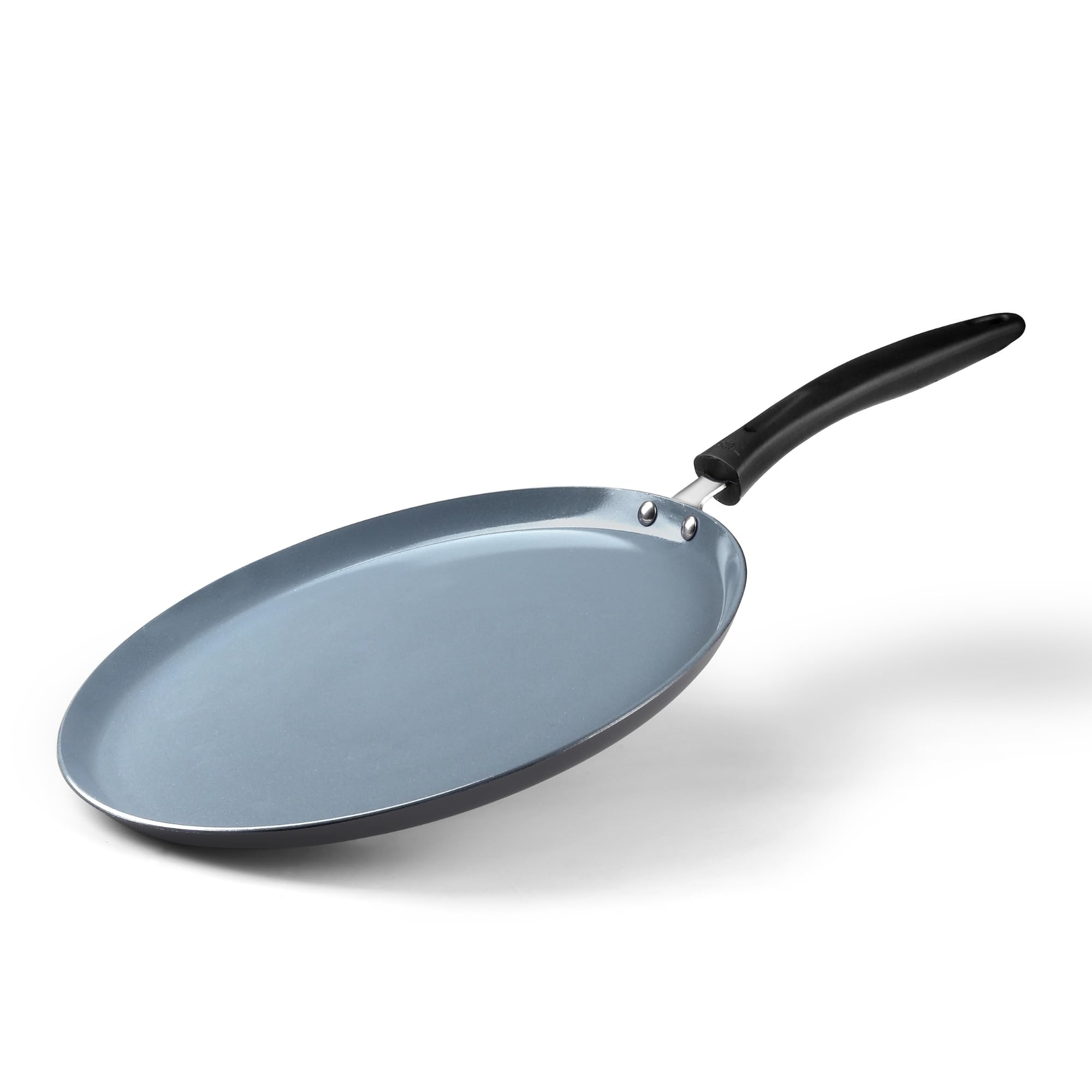
The coating is food-safe, heat-tolerant to roughly 400–450°C, and naturally slick when new — a fried egg slides off with barely any oil. That low-oil cooking is the headline reason Indian home cooks switch: dosas, cheelas, omelettes and shallow-fried items need a fraction of the ghee or oil they'd use on bare steel.
Ceramic vs Teflon (PTFE): the honest trade-off
Both are non-stick. The difference is chemistry and lifespan.
| Ceramic (sol-gel) | Teflon (PTFE) | |
|---|---|---|
| Coating chemistry | Silica-based, PTFE/PFOA-free | Fluoropolymer (PTFE) |
| Heat tolerance | ~450°C | Degrades ~260°C+ |
| Non-stick when new | Excellent | Excellent |
| Non-stick after 1–2 yrs | Fades faster | Holds longer if unscratched |
| Metal utensils | No | No |
| Typical price (Indian retail) | Lower | Similar to slightly higher |
The blunt truth: a good ceramic pan is slicker than Teflon when new, but the coating wears faster. Expect strong performance for 12–18 months of daily use, then a gradual loss of slip. Because these pans are now cheap, that trade is easy to accept — you replace one ₹900 pan instead of nursing one ₹3,000 pan for a decade.
Ceramic wins clearly on two counts: it tolerates far higher heat without chemical breakdown, and it carries no PTFE/PFOA worry at all. For anyone specifically avoiding Teflon chemistry, ceramic is the obvious pick.
How to make a cheap ceramic coating last
The single biggest reason budget ceramic pans "die" early is user error, not the coating. Five habits triple the lifespan:
- Never use metal. Wooden or silicone spatulas only. One steel ladle scrape starts a bald patch that spreads.
- Cook on low-to-medium heat. Ceramic transfers heat fast; you rarely need high flame. High heat cooks the coating, not just the food.
- Add a little oil. "Non-stick" doesn't mean "zero fat forever." A light film of oil protects the surface and extends slickness.
- Let it cool before washing. Dunking a hot pan in cold water thermally shocks the coating and warps thin aluminium.
- Hand-wash, don't scrub. Soft sponge, mild soap. Skip the steel scrubber and the dishwasher.
Do these and a ₹900 pan easily outlives its price.
4 ceramic non-stick deals under ₹1,100 (live now)
These are the pieces we'd actually build a starter set around — one of each shape covers 90% of Indian home cooking. Prices below were verified live on the product pages; check the deal page for the current number before buying.
Tawa — Tower Cerasure 28cm Ceramic Non-Stick Tawa
The workhorse. A 28cm flat tawa handles roti, dosa, cheela, uttapam and shallow-frying. The Cerasure ceramic coating is genuinely low-oil, and 28cm is the right diameter for family-size dosas without overhanging a standard burner. Gas and induction compatible. Live around ₹999.
Fry pan — Tower 22cm Ceramic Non-Stick Fry Pan
The everyday egg-and-sauté pan. 22cm is a smart single-person-to-couple size — quick to heat, easy to clean, and small enough to store. Ideal for omelettes, bhurji, tadka and stir-frying a portion or two. Live around ₹899.
Sauce pan — Tower 16cm Ceramic Non-Stick Sauce Pan with Lid
For milk, tea, small dals, custard and reheating. The 16cm size with a glass lid is the piece most people underrate until they own one — non-stick means boiled-over milk wipes off instead of baking on. Live around ₹899.
Kadai — Tower 24cm Ceramic Non-Stick Kadai with Glass Lid
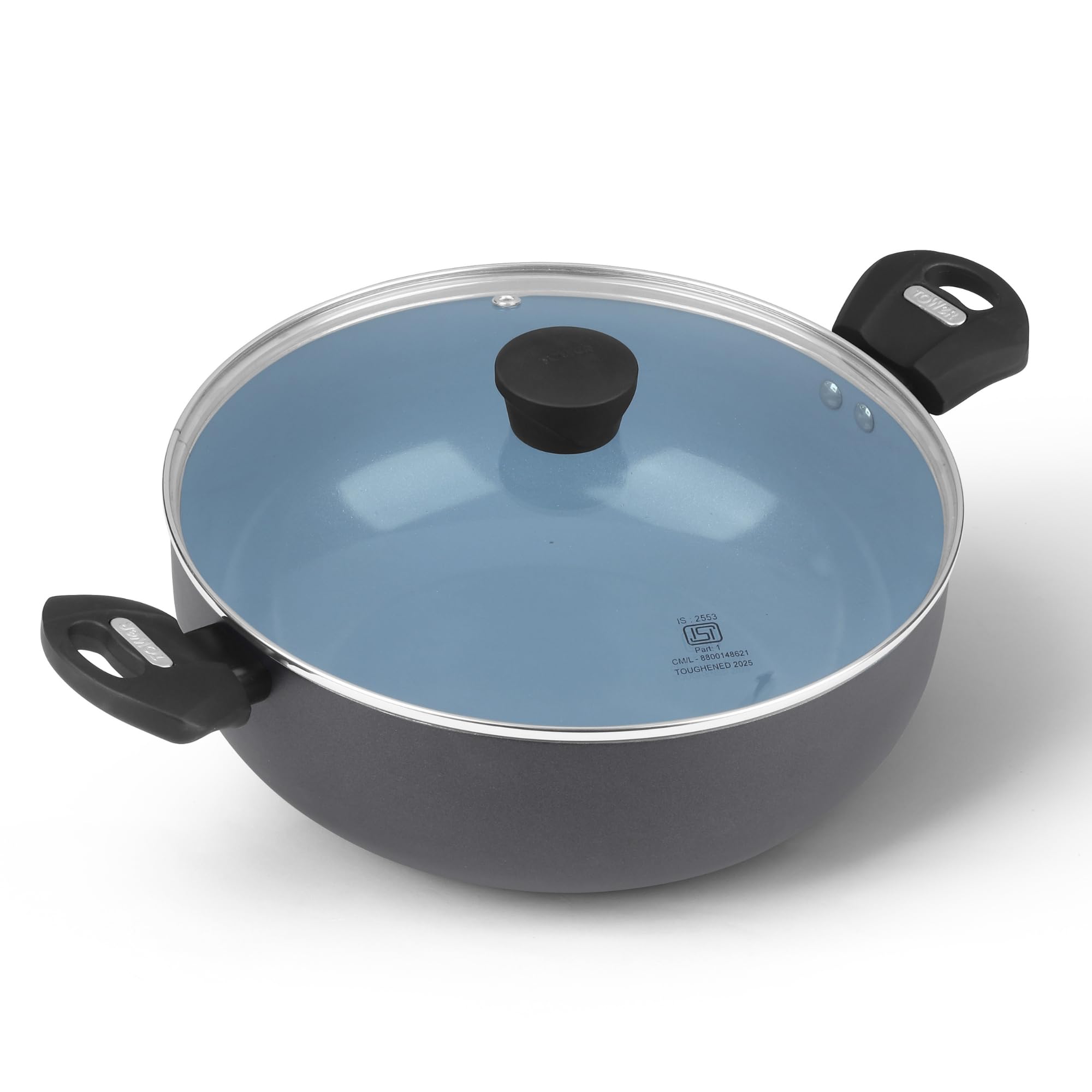
The curry and deep-fry piece. 24cm with a glass lid does sabzi, gravy, biryani base and light deep-frying, and the lid lets you steam or slow-cook without lifting to check. This is the piece that replaces a heavy old iron kadai for daily use. Live around ₹1,099.
Buy them together and you have a complete four-piece ceramic set for well under ₹4,000 — a fraction of what a branded set costs, with the same PTFE-free coating.
How to size a set for your kitchen
- Cooking for 1–2: 22cm fry pan + 16cm sauce pan + 24cm kadai. Skip the big tawa if you rarely make dosa.
- Family of 3–4: all four. The 28cm tawa earns its place the moment you make dosas or multiple rotis.
- Induction users: confirm the base is induction-ready (the Tower pieces above are) — a flat magnetic base matters more than diameter for even heating.
Bottom line
Ceramic non-stick under ₹1,000 is the best value upgrade in an Indian kitchen right now: PTFE-free, low-oil, slick when new, and cheap enough that the faster wear rate doesn't hurt. Treat it gently — no metal, no high heat, no cold-shock washing — and a budget set easily lasts a year and a half of daily cooking.
See every live cookware price on RichDeals /offers and grab the pieces while the sub-₹1,000 deals hold.
Prices and availability change fast — always confirm the live price on the linked deal page before purchase.
Frequently asked questions
What is ceramic non-stick cookware made of?
Not solid ceramic. It is a thin sol-gel silica coating — essentially a glass-like layer — sprayed and cured onto an aluminium body. It is PTFE-free and PFOA-free, so there is no Teflon chemistry involved.
Is ceramic non-stick safer than Teflon?
It removes the PTFE and PFOA question entirely, and it tolerates far higher heat — roughly 400–450°C, against PTFE which begins degrading above about 260°C. For anyone specifically avoiding Teflon chemistry, ceramic is the straightforward choice.
How long does a cheap ceramic pan last?
Expect strong non-stick performance for about 12–18 months of daily use, then a gradual loss of slip. Ceramic is slicker than Teflon when new but wears faster — which is an easy trade when the pan costs around ₹900 rather than ₹3,000.
How do I stop the coating wearing out early?
Five habits do most of the work: wooden or silicone utensils only, low-to-medium heat, a light film of oil each time, let the pan cool before washing, and hand-wash with a soft sponge. Most budget ceramic pans die of user error, not coating failure.
Can I use metal spatulas on ceramic non-stick?
No. One steel ladle scrape starts a bald patch that spreads. This is the single fastest way to ruin the pan.
Which pieces do I actually need?
Cooking for one or two: a 22cm fry pan, a 16cm sauce pan and a 24cm kadai. A family of three or four adds the 28cm tawa, which earns its place the moment dosas or multiple rotis are involved.
Does ceramic cookware work on induction?
Only if the base is induction-ready. Check for a flat magnetic base — for even heating on induction that matters more than the pan's diameter.
Does non-stick mean I can cook with no oil at all?
No. A light film of oil protects the surface and keeps it slick for longer. Ceramic does mean a fraction of the ghee or oil a bare steel pan needs for dosas, cheelas and omelettes.
Ready to save?
Browse today's handpicked deals — verified prices, updated every few minutes.
See Live DealsKeep reading
 Comparison
Full-Body Triply vs Triply Base Cookware: How to Tell Which One You Are Buying (India 2026)
"Triply" can mean three layers through the whole pan or only a disc on the base. How to spot the difference on a listing, plus triply vs non-stick.
 Guide
GuideNo-Cost EMI Explained: Is It Really Free in India?
No-cost EMI in India isn't always free — here's where the interest actually hides and when financing beats paying upfront.
 Comparison
Trolley Bag Set of 3 vs Single Suitcase: Which Should You Buy in India (2026)?
Set of 3, set of 2 or one suitcase? Per-bag cost, storage, airline weight limits and hard-shell material explained, with live Indian luggage deals from ₹1,376.